How We Combine Separate Photos into One Cohesive Watercolor Portrait
Two energetic dogs rarely look at the camera at the same second, and sometimes a family wishes to honor a passed pet beside a newer puppy they never met in life. Combining separate snapshots works beautifully in watercolor when lighting direction, eye-level perspective, and shoulder scale are harmonized before a single wash is laid down.
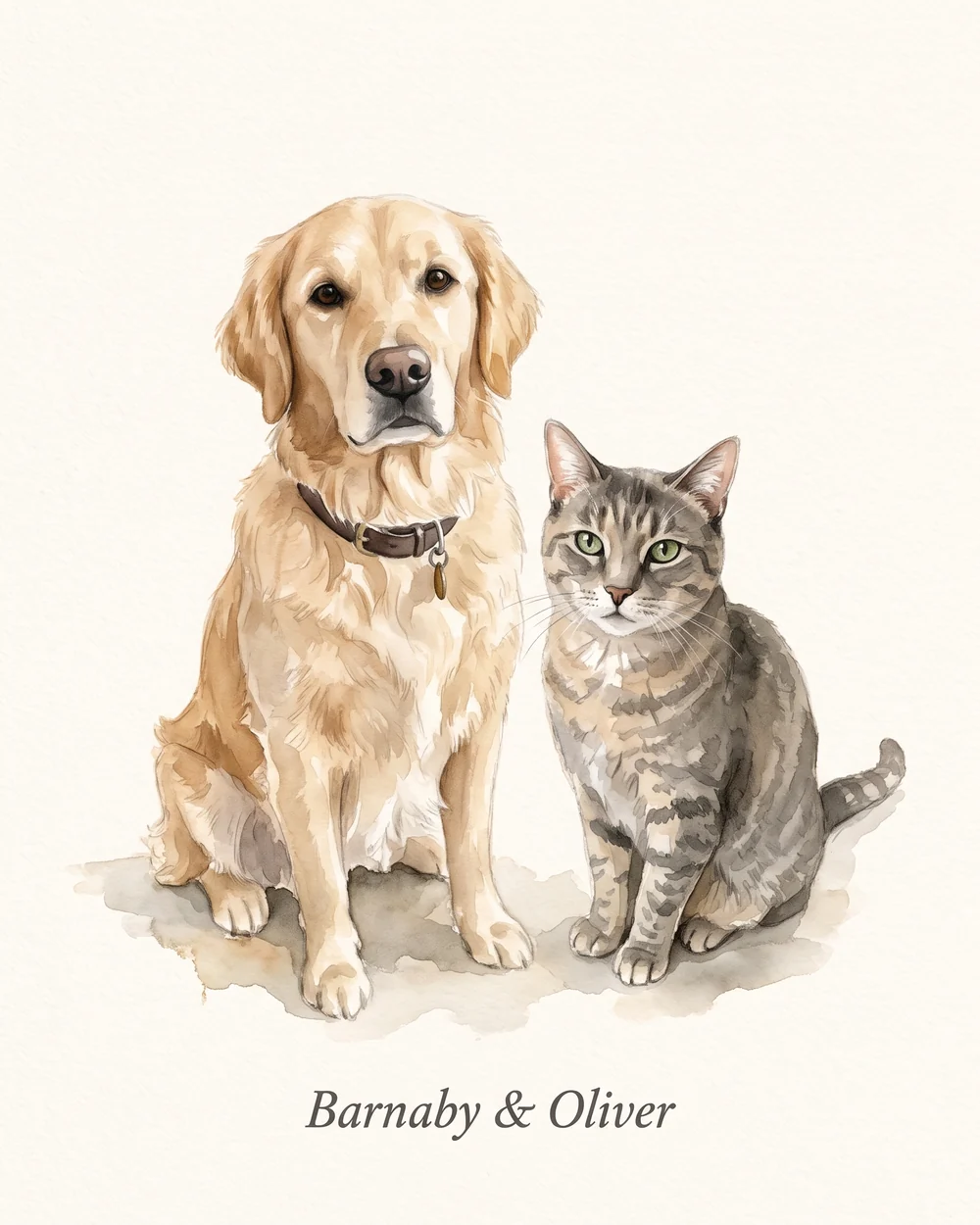
Why studio watercolor unifies separate snapshots better than photo cutouts
Standard photo collages often look pasted together because one phone camera used cool daylight on a porch while another used warm tungsten bulbs indoors years earlier. When our digital watercolor studio composes on warm 300gsm cold-press cotton paper styling, disparate backgrounds disappear completely and pigment washes share a single palette, paper grain, and soft edge vignette.
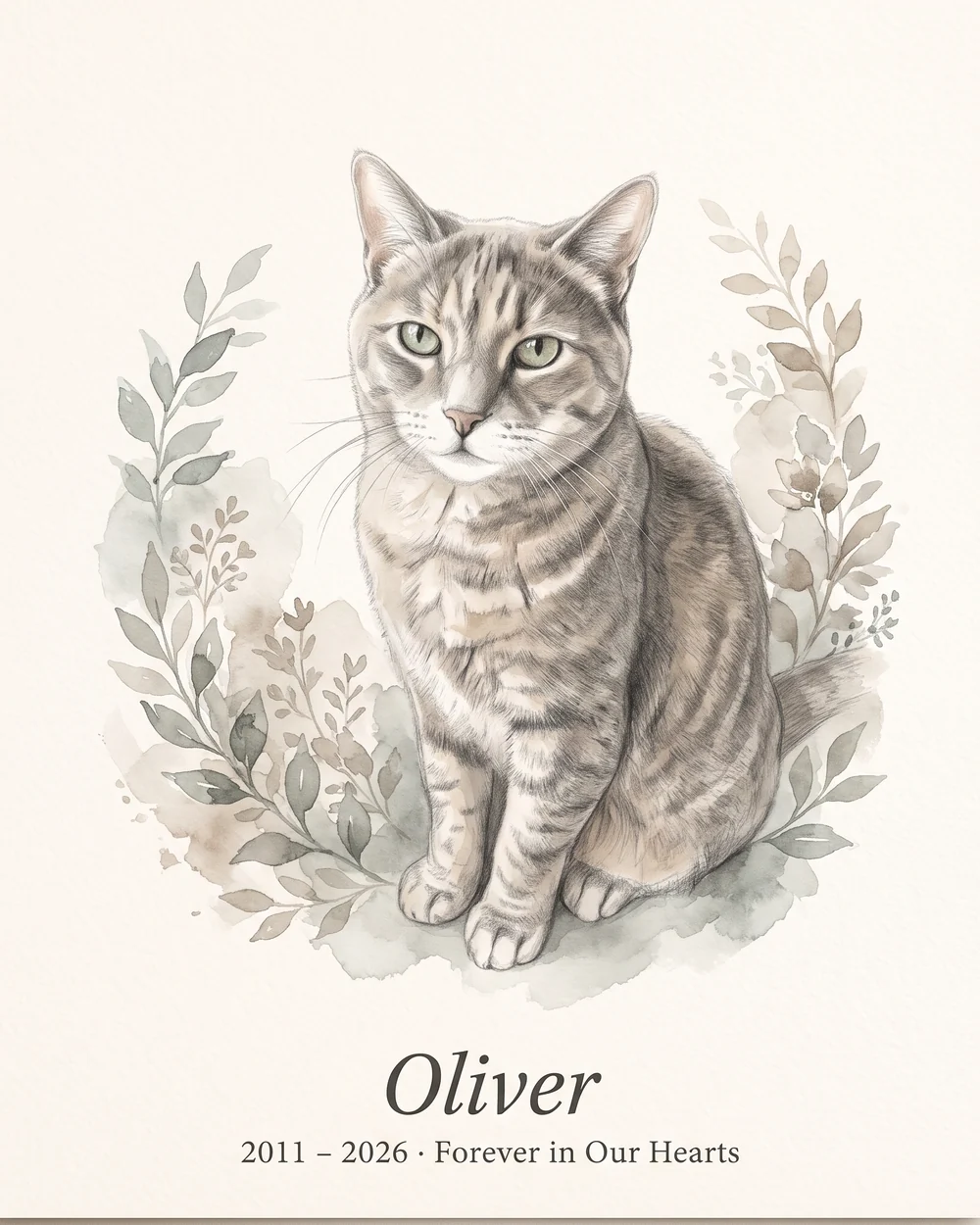
That shared medium lets us place a senior dog photographed five years ago right beside a newly adopted puppy or tabby cat so they appear to be sitting calmly together in the same quiet studio light.
How we balance lighting direction, eye-level perspective, and relative scale
Three visual details determine whether a multi-subject portrait feels natural or disjointed: camera angle, light source, and chest-to-shoulder proportion.
When reviewing your uploaded snapshots, our studio aligns eye levels onto a shared horizon line, normalizes highlights so light falls consistently across every subject’s nose and eyes, and adjusts relative stature so a twelve-pound cat or terrier sits in believable proportion next to a seventy-pound retriever.
Key studio adjustments made across 2 to 4 source photos
| Visual Element | Common Snapshot Mismatch | How Our Studio Harmonizes It |
|---|---|---|
| Lighting Direction | Photo 1 backlit outdoors; Photo 2 lit by indoor lamp from the left | Rebalances shadow warmth and eye catchlights so washes share one soft directional studio light. |
| Eye-Level Perspective | One pet photographed straight-on, another from standing height | Aligns head carriage and chest fade so subjects share a cohesive seated plane. |
| Relative Scale | Close-up selfie of a small cat paired with full-body yard shot of a large dog | Scales head width and shoulder height to match real-world breed proportions (or your notes). |
What 2 to 4 photos to pick for the clearest likeness
You do not need matching outfits, identical rooms, or high-end DSLR files. Following a few simple selection tips helps our studio capture each personality accurately on the first proof:
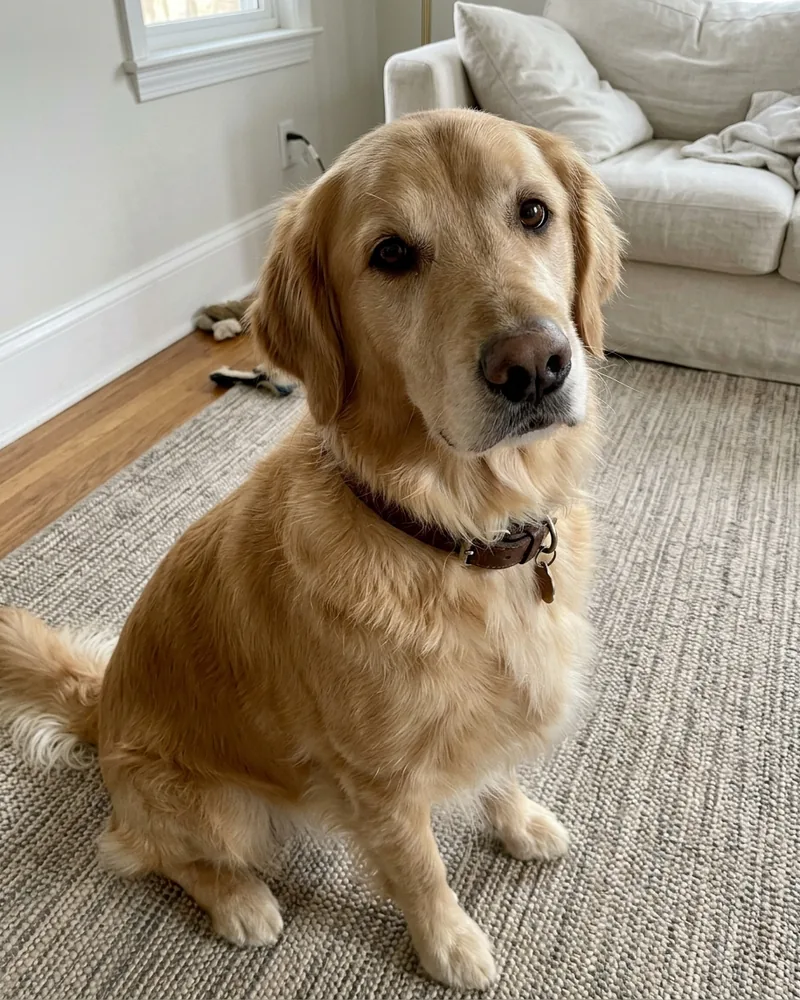
- Pick chest-up or seated angles roughly near eye level rather than steep top-down floor shots whenever available.
- Choose photos where both eyes and the bridge of the nose are unobstructed by toys, grass, or heavy motion blur.
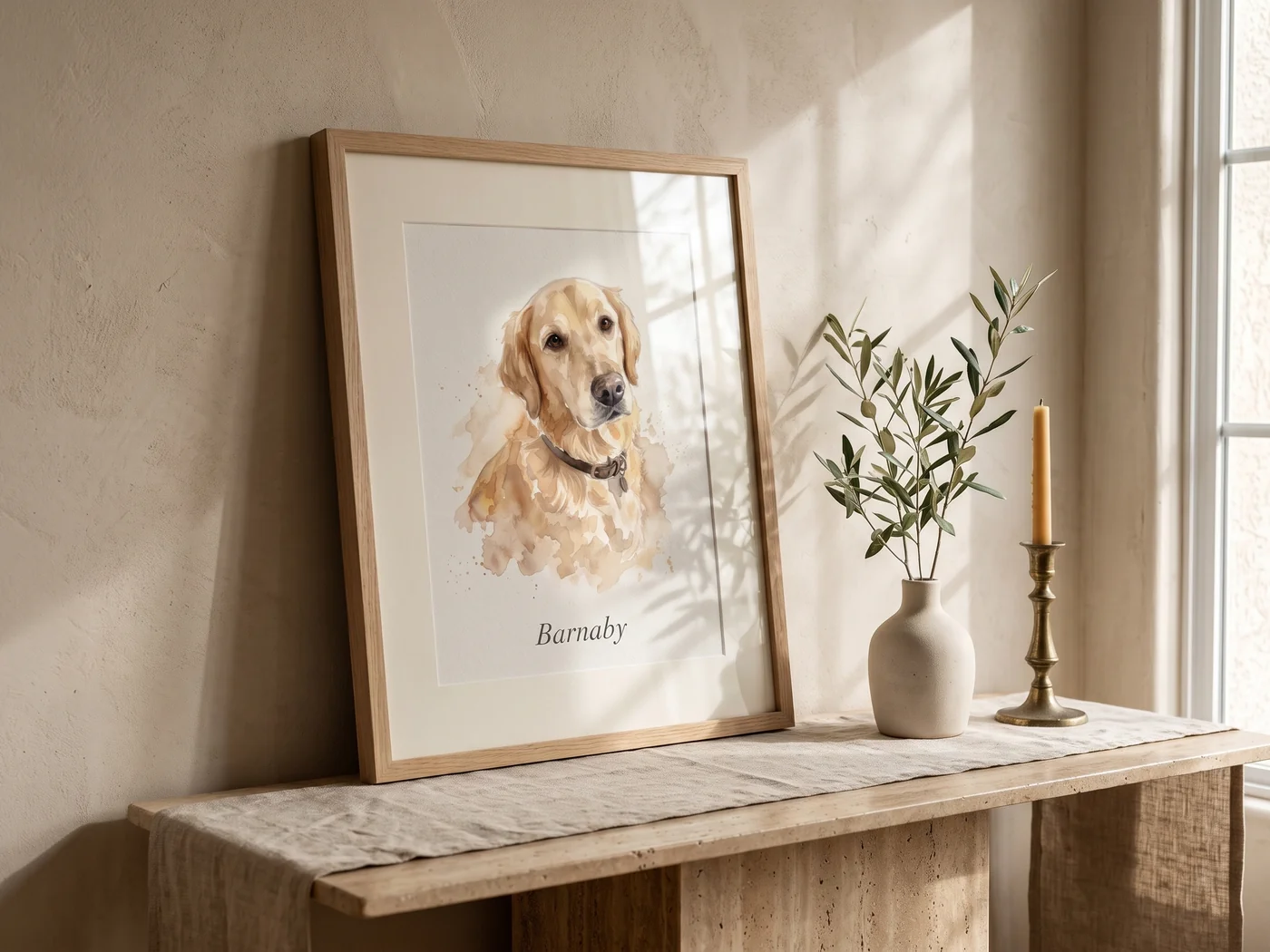
- Include a brief note on real-world size differences (for example: "Barnaby is 70 lbs on the left; Oliver is a smaller 10 lb tabby tucked close on his right").
- Mention any collar, bandana, or tribute detail to keep or omit, plus the names or family line you want lettered centered below.
See 2 to 4 separate photos united in one portrait
Upload up to four separate snapshots and describe your preferred arrangement to generate a free watermarked proof.